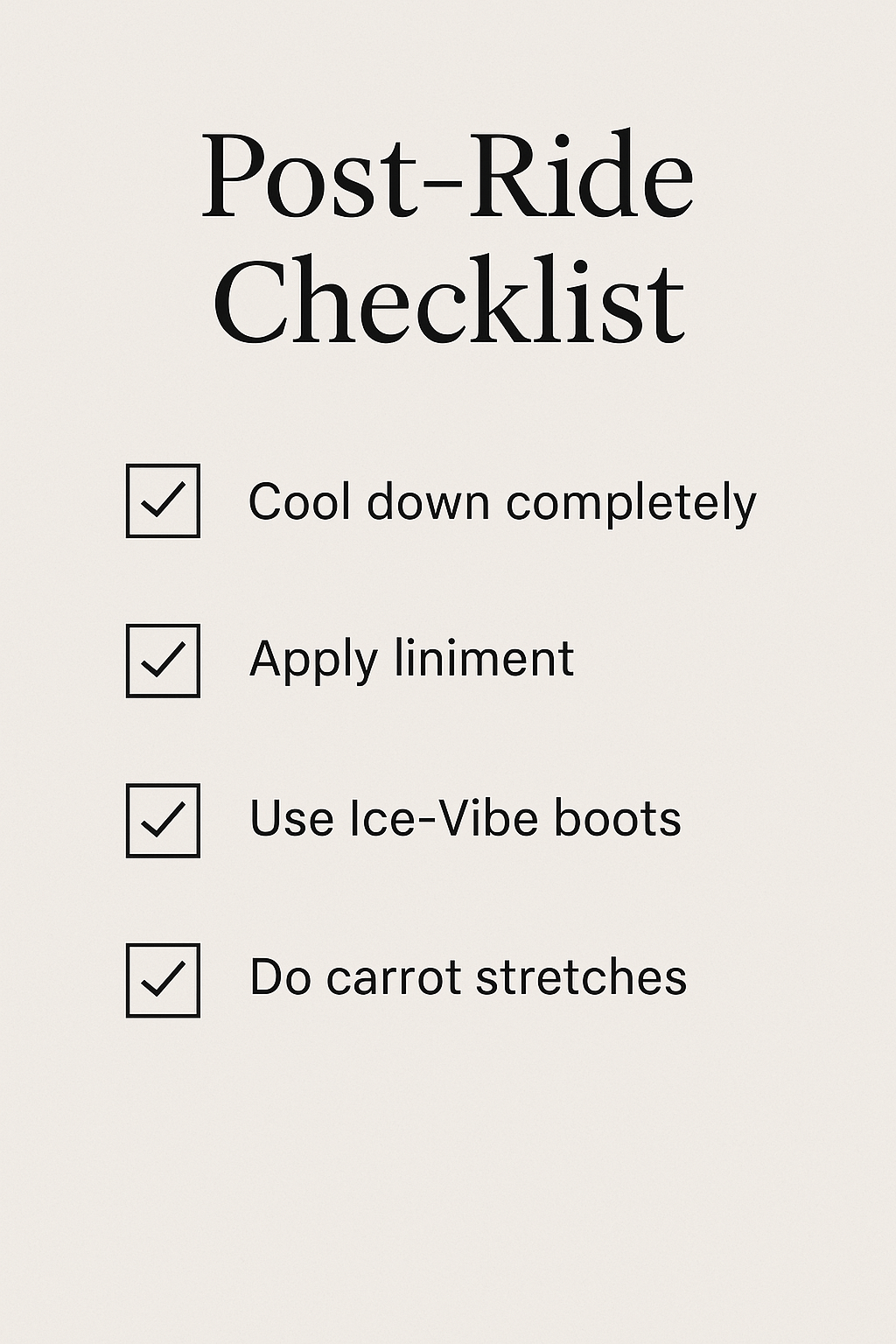
There’s a rhythm to every ride: groom, tack up, warm up, work, cool down. It’s easy to think that once you hop off and untack, the job is done. But I’ve learned—especially riding a horse like Oberon—that what you do after the ride can matter just as much as what you did in the saddle.
Recovery is part of the ride.
Whether it’s a tough dressage school or a jumping lesson that pushes us physically and mentally, I always think about how I’m helping Oberon bounce back. He gives me his all, even on the days when I don’t have my best ride. The least I can do is make sure he feels good the next day.
My recovery process: Liniment
After untacking, my recovery routine almost always includes liniment and Ice-Vibe boots. I rub him down with Absorbine® Veterinary Liniment Gel—something to help ease any muscle tension or inflammation. It’s not just about pampering; it’s about supporting circulation and keeping tightness from settling in. Oberon leans into it, like he knows what it’s for.
This gel is designed to relieve muscle and joint soreness, reduce inflammation, and help ease stiffness—all things that are just as important for our equine partners as they are for us. What I love about the gel formula is that it’s non-greasy and absorbs quickly—so it’s easy to apply and doesn’t leave a sticky mess. It’s especially helpful during the cooler months when cold hosing isn’t practical, but I still want to give Oberon some relief.
Key aspects of Liniment:
Relieves pain and stiffness from overexertion or minor strains
Reduces inflammation and swelling
Improves circulation, which helps muscles recover more quickly
Works as a warm-up aid before riding to loosen muscles
My recovery process: Ice Vibe Boots
Then I put the Ice-Vibe boots on his front legs while I clean up and finish his cooldown. The vibration and cooling combo helps reduce inflammation and encourages recovery. It’s a small, easy step—but it adds up. I can feel the difference in him the next ride: looser, more relaxed, ready to go again.
Key Aspects for Ice Vibe:
Ice-Vibe boots combine the benefits of cold therapy and massage to support your horse’s legs post-exercise. The cold packs help reduce inflammation and swelling, while the gentle vibration encourages circulation—speeding up the healing process and helping to flush out any built-up toxins or lactic acid. This combination makes them especially effective for managing tendon or ligament strain, as well as general soreness after a ride. I like using them as part of Oberon’s post-ride routine to keep his legs feeling fresh, especially after intense work or trailering. Think of them like a high-tech ice pack and massage therapist rolled into one, designed specifically for equine athletes.
My recovery process: Carrot stretches
And of course, we never skip his favorite part: carrot stretches. It’s a simple ritual, but one that means a lot for his flexibility—and probably just as much for our relationship. He gets so into it, reaching as far as he can for each side stretch like it’s a game. I love ending our ride with something he clearly enjoys, and it helps keep his body supple and engaged.
Why carrot stretches?
Carrot stretches are one of those small things that make a big difference in Oberon’s post-ride routine. They’re simple, require no special equipment (just a treat and a willing horse!), and offer a ton of benefits when practiced regularly.
So what exactly are carrot stretches? They’re a form of dynamic mobilization where you use a treat—like a carrot, apple slice, or horse cookie—to guide your horse into specific stretch positions. The movement helps your horse activate and strengthen muscles while increasing flexibility and body awareness.
The Benefits of Carrot Stretches
Here’s why they’ve earned a permanent place in our cool-down routine:
Improved Flexibility: These stretches help keep Oberon’s neck, spine, and back supple. Over time, this increases his range of motion, which is especially helpful as we work on more advanced movements or recover from a tough ride.
Core Strengthening: As your horse reaches and bends, they engage their abdominal and spinal stabilizer muscles. Think of it as equine Pilates—great for posture, balance, and long-term soundness.
Better Balance and Body Awareness: Carrot stretches require your horse to shift weight and reach in different directions, helping them stay more in tune with their own movement. This can translate to better balance under saddle.
Injury Prevention and Rehab Support: These exercises can help prevent stiffness and reduce the risk of soft tissue injuries. They’re also often recommended as part of rehab programs to gently build strength and flexibility after an injury.
Sometimes taking care of your horse means learning to slow down after the adrenaline wears off. Not rushing out the barn door. Not skipping the little things. Because the horses don’t just need us to ride them well—they need us to recover with them too.
Oberon works hard for me. Keeping him feeling good isn’t optional. It’s the standard.
Sources
Horseware Ireland. Ice-Vibe® Therapy. Horseware, https://www.horseware.com/en-us/therapy/ice-vibe. Accessed 9 Apr. 2025.
University of Tennessee College of Veterinary Medicine. Equine Carrot Stretches. University of Tennessee, https://vetmed.tennessee.edu/wp-content/uploads/sites/4/UTCVM_EquineCarrotStretches.pdf. Accessed 9 Apr. 2025.
W.F. Young, Inc. Absorbine® Veterinary Liniment Gel. Absorbine, https://absorbine.com/products/absorbine-veterinary-liniment-gel. Accessed 9 Apr. 2025.
 Riding Against The Grain
Leave a comment